How Close Can You Get To The Seals On A Seal Safari?
The official 20 metre and 50 metre rules for watching New Zealand fur seals, what they mean on a Wellington seal safari, and what the law says about boats, swimmers and drones.
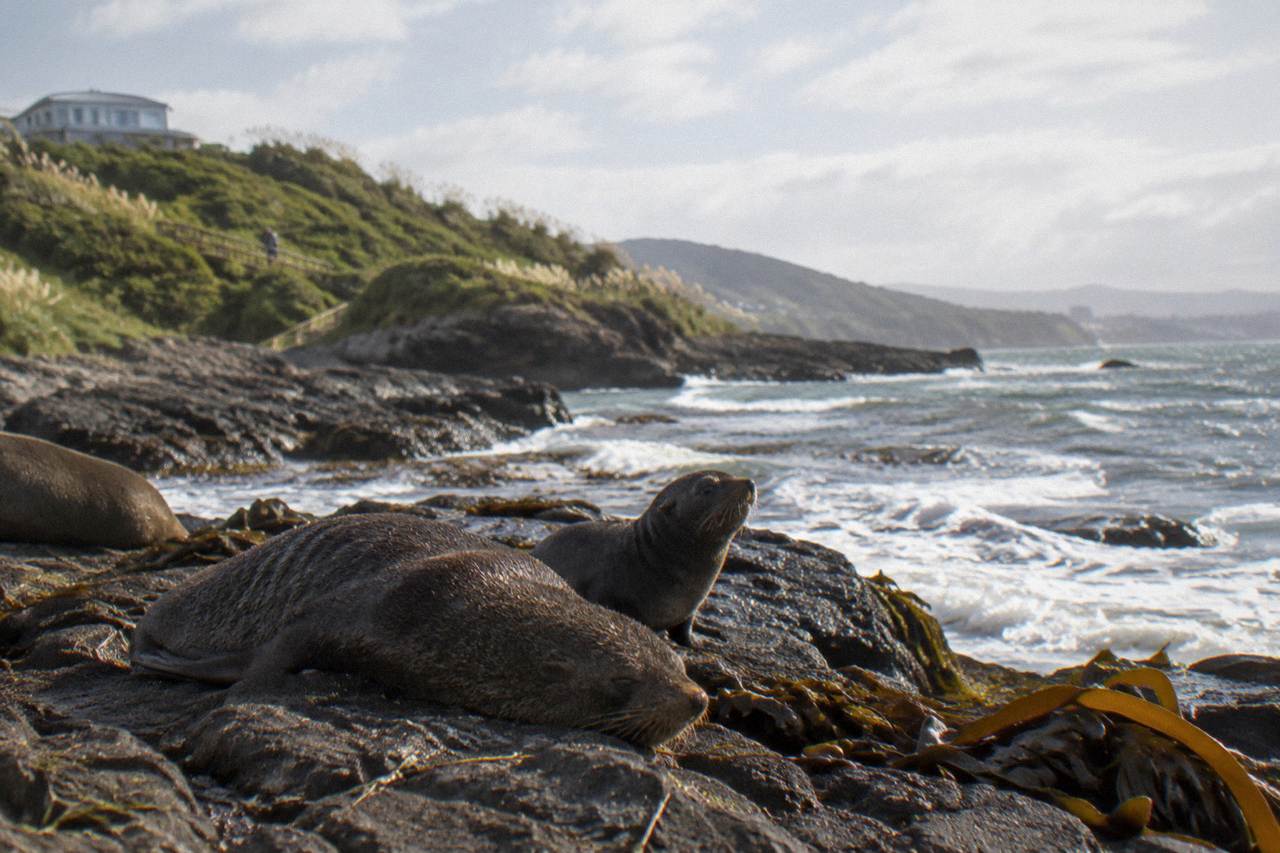
The question sounds simple, and it has a precise answer. New Zealand law, through the Marine Mammals Protection Act 1978, protects kekeno, the New Zealand fur seal, and the Department of Conservation turns that protection into hard numbers: 20 metres on foot, 50 metres for a vehicle where you can manage it, 20 metres for a boat, and 5 metres if you are swimming. Harassing or disturbing a seal is an offence carrying a maximum penalty of two years in prison or a fine up to $250,000. On a Wellington seal safari those numbers are the whole frame for the experience: the 20 metre onshore rule applies to guests as well, and the animal never has to change what it was doing.
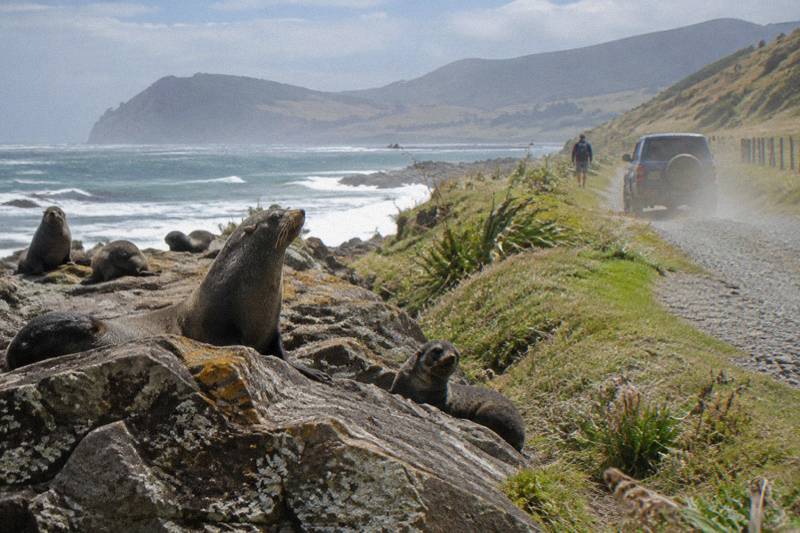
On a Wellington seal safari you can expect to view seals from roughly 20 metres or more, the distance the Department of Conservation asks people to keep from seals onshore, and about 50 metres where a vehicle is involved. No tour promises closer, and none needs to: a 4WD stopped at a respectful gap with binoculars or a long lens delivers the sighting.
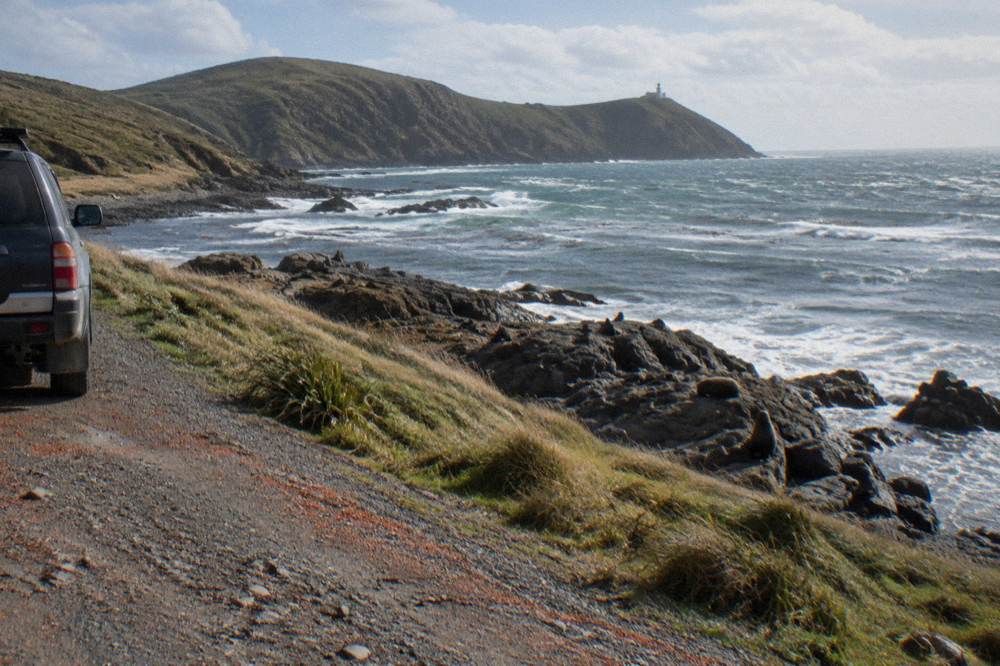
That is the honest version, and it is worth setting expectations early. A seal safari is not a swim-with encounter. It is a 4WD trip along a coastal route, in this case across private farmland at Terawhiti Station towards Cape Terawhiti. The seals at the coast are wild kekeno, and the law treats them the same whether you arrive on foot, by boat or in a small-group 4WD.
The distance is not a disappointment in practice. Kekeno are the most common seals in New Zealand and their population is growing; DOC's 2026 nationwide modelled estimate is 208,536 to 251,644 animals. A colony hauled out on rocks is fully watchable from well beyond 20 metres. If you want to spot them from other shorelines as well, the guide to kekeno watching spots around New Zealand explains where the colonies are and how close you're allowed to get.
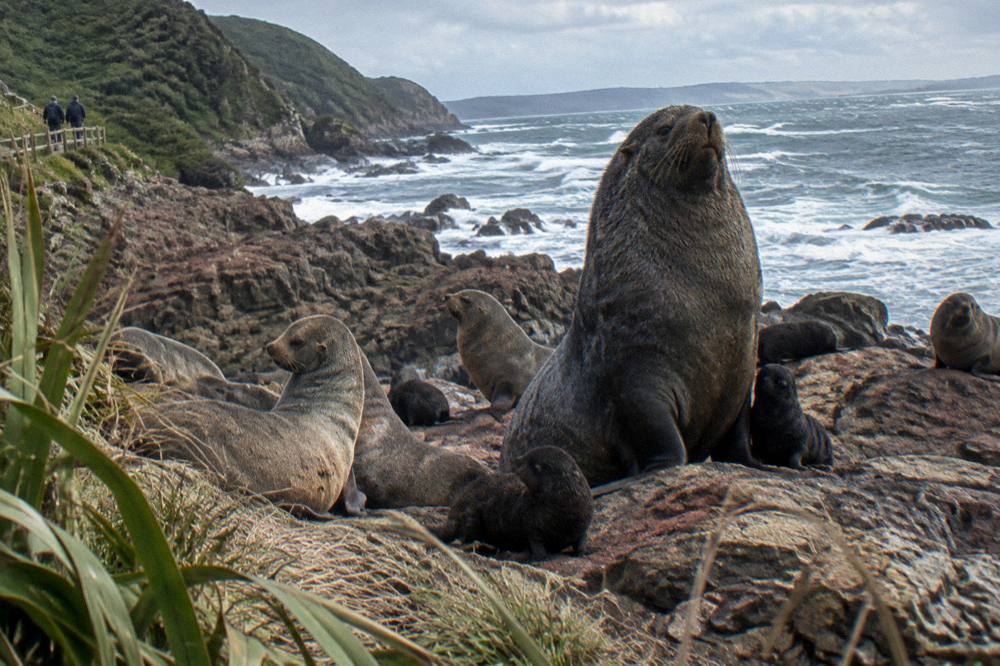
Binoculars settle most of the practical question. DOC's onshore figure is a minimum, not a target, and nothing about a 4WD changes your own obligations once you step out. So the arithmetic for any safari day is simple: your longest optical reach, not your legs, defines the experience. A group of ten standing quiet at distance, as the featured trip allows, gets natural behaviour on the rocks. The same trip's second booking page does not state a group maximum, which is one of the small differences between the two pages worth knowing before you book.
The featured trip on this site, the Exclusive Access Seal Coast Safari, runs 3 hours 30 minutes from Wellington hotel or cruise ship pickup, from $111.80 per person, in a 4WD Mercedes with a maximum of 10 guests, rated 4.9 across 371 reviews. Its itinerary names Otari-Wilton's Bush, Terawhiti Station and Cape Terawhiti. Neither booking page promises a sighting. You can check dates and read more in the seal safari tours compared guide.
What Are The Official Distancing Rules In New Zealand?
DOC's rules are: stay at least 20 metres from seals onshore where you can, do not drive a vehicle closer than 50 metres to a marine mammal where you can avoid it, keep vessels at least 20 metres from the water's edge where seals may be present, and leave 5 metres if swimming. Never touch a seal, and drones near marine mammals need DOC authorisation.
Those numbers come from the Department of Conservation, which enforces the Marine Mammals Protection Act 1978. The act makes harassing or disturbing a marine mammal an offence, with a maximum penalty of two years in prison or a fine up to $250,000, and DOC runs a hotline, 0800 DOC HOT (0800 362 468), for harassment, injury or entanglement reports. The rules exist because seals respond to pressure in ways that cost them energy or, worse, cost a pup its mother. Disturbed pups can be abandoned, which is why DOC also asks people not to feed seals, not to make loud noise near them, and to keep children back.
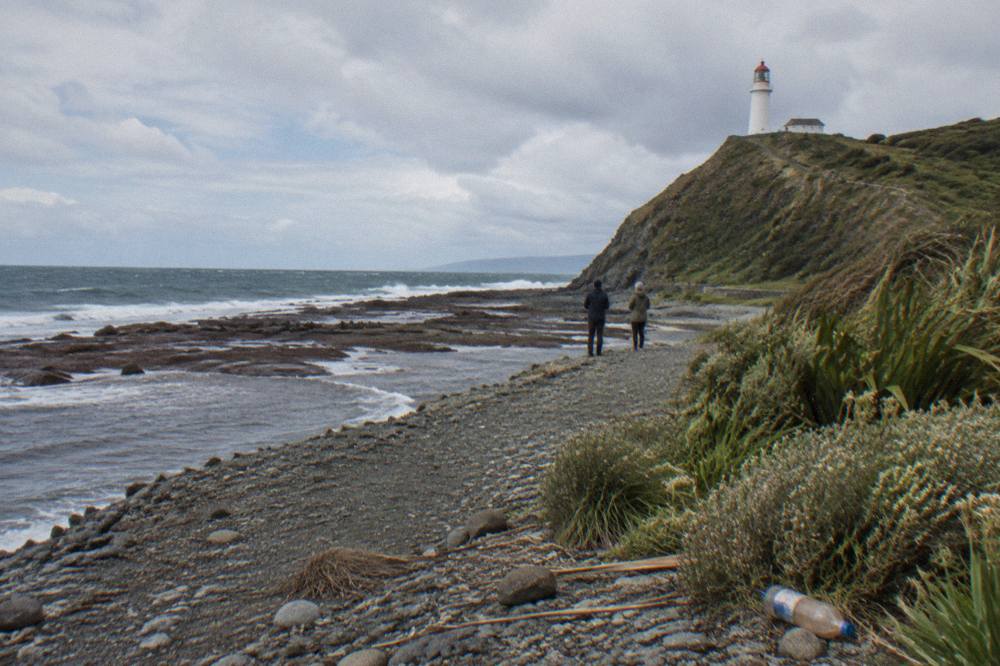
The finer points matter as much as the headline figures. Avoid coming between a fur seal and the sea, because that blocks its escape route and reads as a threat. Keep dogs on a leash and well away. Do not touch a seal even if it appears calm; DOC warns they can be aggressive and carry disease. And the selfie rule is blunt: do not take selfies with seals. A wide shot with the animal small in the frame is both safer and, usually, a better photograph.
One rule people miss is the direction of approach. DOC asks you never to come between a fur seal and the sea, because the water is its escape route, and this applies regardless of how far away you started. DOC's hotline, 0800 DOC HOT (0800 362 468), takes reports of harassment, injury or entanglement, so if you see someone crowding a seal you have somewhere to turn. On guided trips the operator manages the stop, but the law does not transfer with the ticket. Every passenger carries the same 20 metres in their own boots.
| Situation | Minimum distance | Source rule |
|---|---|---|
| On foot, seal onshore | 20 m where you can | DOC marine mammal rules |
| Vehicle near a marine mammal | 50 m where you can | DOC marine mammal rules |
| Vessel near waters seals may use | 20 m from the water's edge | DOC marine mammal rules |
| Swimmer | 5 m | DOC marine mammal rules |
| Drone near marine mammals | DOC authorisation required | DOC marine mammal rules |
If you want the wildlife-viewing background in one place before choosing a trip, the Wellington wildlife tours compared guide breaks down which tours name seals on their itinerary and which are bird and sanctuary experiences instead.
How Close Does The Seal Coast Safari Actually Get?
The Seal Coast Safari booking pages do not mention a viewing distance. The safari crosses Terawhiti Station private farmland by 4WD to Cape Terawhiti, the group is capped at 10, and the itinerary names the seals you pass on the way.
There are two ways to book this product family, and the details differ slightly. The featured Exclusive Access Seal Coast Safari is from $111.80 per person, 4.9 across 371 reviews, with hotel or cruise ship pickup, a 4WD Mercedes, a group maximum of 10 and a 3 hours 30 minute runtime. The same safari's second booking page, the Wanderlust Half Day Seal Safari, is from $110 per person, 4.9 across 342 reviews, from Wellington central pickup or the cruise terminal, also 3 hours 30 minutes. Both read a full refund if cancelled at least 24 hours before the start. The featured trip says the experience requires good weather and a poor-weather cancellation brings a different date or a full refund; the other says the safari runs in all weather, routes may change, and a confirmed booking can move to another day at no charge with 24 hours notice.
One health note that belongs here rather than scattered later: the featured safari's booking page says the trip is not recommended for travellers with back, neck or heart conditions or who are pregnant, and it is not wheelchair accessible. The distance rules are only one half of a comfortable seal safari; the other half is whether the vehicle suits your body, and the booking page is where to check that for yourself.
Because the safari crosses private farmland at Terawhiti Station, the usual public-access questions work differently here. The route is not the council's coastal track and it is not a walk; you stay with the vehicle across working land towards Cape Terawhiti, with Otari-Wilton's Bush named as a stop on the itinerary. That matters for distance in a quiet way. On public ground you choose your own gap, and mistakes happen at the margins. Neither booking page names a guide, so do not expect a naturalist commentary promise in writing. What is written is the route, the runtime, the pickup and the cap of ten guests on the featured page.
Can You Get Closer On Foot At Red Rocks?
No, and in one sense the opposite: on foot you are the thing the seal watches. The council's Pariwhero Red Rocks walk is a 7.4 km, 2 to 3 hour return track from Owhiro Bay, past early-1900s baches to Devil's Gate at Te Rimurapa, and every DOC rule, including the 20 metre onshore minimum, applies to you directly rather than to a driver.
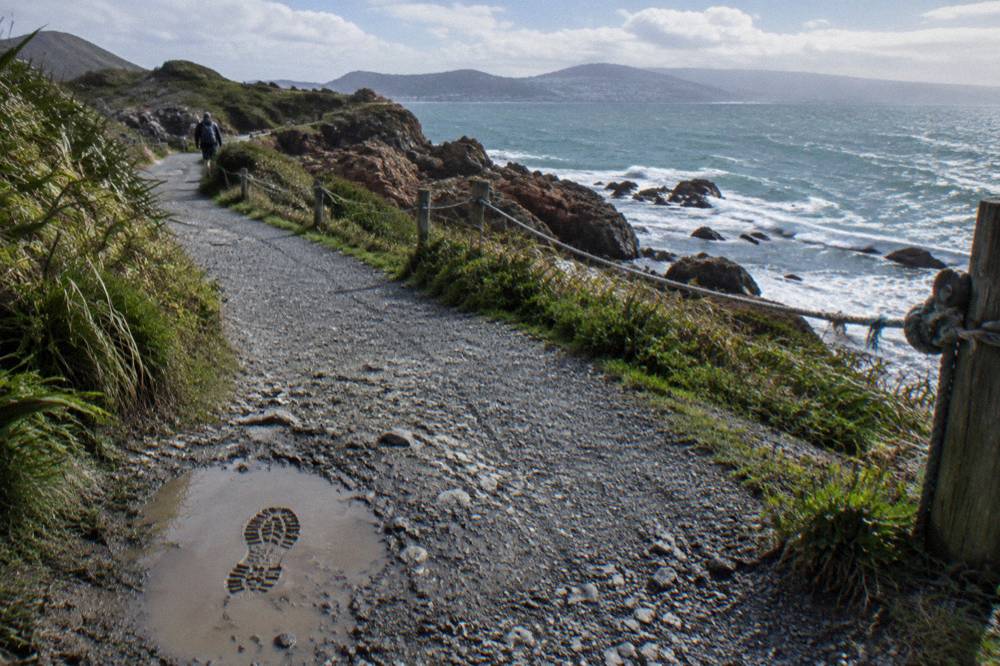
The Red Rocks route is a Wellington City Council walk, not a tour, and it runs along an unsealed track that the council calls uneven and unsuitable for 2WD vehicles; you walk, cycle or take a 4WD. The gate is closed to vehicles on Sundays, open to walkers and mountain bikers. The council says you can meet the kekeno in winter just beyond Pariwhero, at Te Rimurapa, and asks dogs on leads and 20 metres from wildlife.
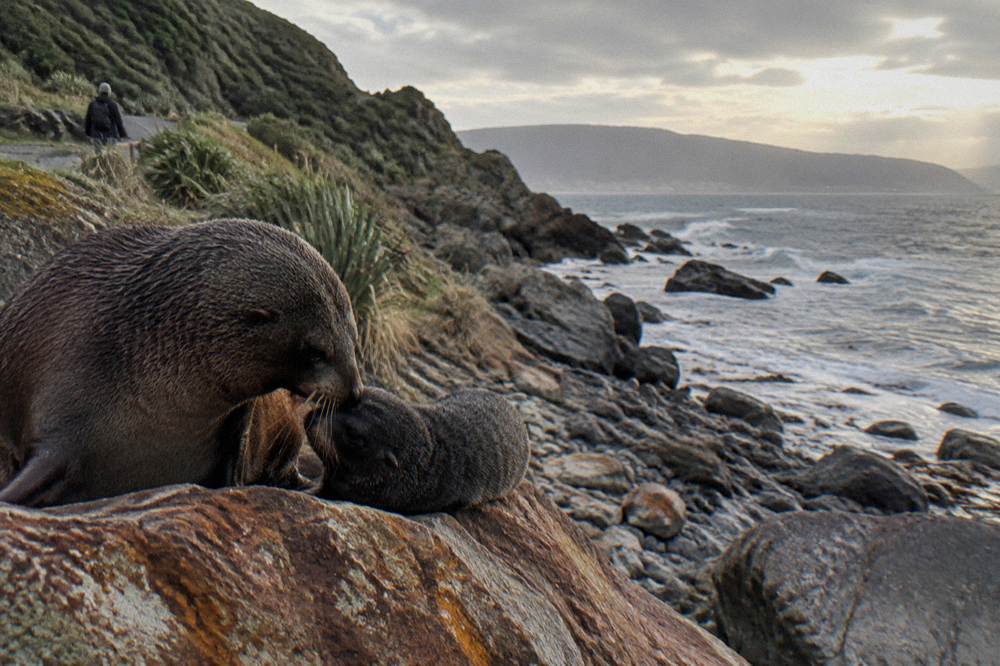
On foot the responsibility sits entirely with you. There is no guide deciding when to stop, and the classic mistakes, approaching for a photo, cutting between a resting seal and the water, letting a child run ahead, are all individual choices. The track is inside the wider Te Kopahou Reserve landscape next to Taputeranga Marine Reserve, established in 2008, 855 hectares about 6 km from the city centre, where no fishing or gathering of marine life is allowed and the same 20 metre seal rule applies on the shore. If you are weighing the two formats side by side, the Red Rocks walk vs seal safari guide compares them on cost, effort and weather exposure.
Timing shapes a Red Rocks walk more than most visitors expect, and not only because of seals. The council notes the route is unsealed, uneven and unsuitable for 2WD vehicles, and the gate is closed to vehicles on Sundays, when walkers and mountain bikers have it. Wind is the other factor: the south coast is exposed, weather changes quickly, and DOC flags changeable conditions and strong currents along this shore. None of that appears on a booking page because none of this is a bookable tour. If you go, start from the Te Kopahou car park at the end of Owhiro Bay Parade, keep dogs on a lead, and give any animal the same 20 metres the law gives it everywhere else. Closer on foot is possible only in the sense that nothing stops you, which is exactly the risk.
One option does include Red Rocks as a stop: the private full day sightseeing tour from Capital Personalised Tours, from $206.40 per person, 7 hours, lunch included, 4.8 across 82 reviews, with Wellington hotel or port pickup, describing seals in their natural environment at that stop. Its booking page states a full refund if it is cancelled at least 24 hours before the start. That is a sensible middle path for a visitor who wants the south coast's geography, from Mount Victoria to the Cable Car, plus a guided seal viewpoint, without self-driving the unsealed road.
Do Boats, Swimmers And Drones Have Different Rules?
Yes. Vessels must keep at least 20 metres from the water's edge where seals may be present, swimmers at least 5 metres, and drones may not be flown near marine mammals without DOC authorisation. The strongest restrictions, and the biggest penalties, attach to anything that pursues, touches or separates a seal from the sea.
The vessel rule surprises people because it is measured from the water's edge, not the animal, precisely because a hauled-out colony should not have to track every boat that passes. Swimmers get the 5 metre figure, which is close enough to feel dangerous to a nervous reader, and DOC's guidance is unambiguous that touching is never acceptable: seals can be aggressive and carry disease. The drone rule catches out photographers who would never dream of walking up to a seal; a drone hovering over a colony is a disturbance in law, and it needs authorisation before it leaves the ground.
Why Do The 20 Metre Rules Matter Most For Pups?
Because a pup pays the price for a close approach. DOC warns that disturbed pups can be abandoned, and a mother separated from her pup by human pressure may not return. The 20 metre onshore rule, the leash rule for dogs and the keep-children-back guidance all exist to stop that outcome, which no photograph justifies.
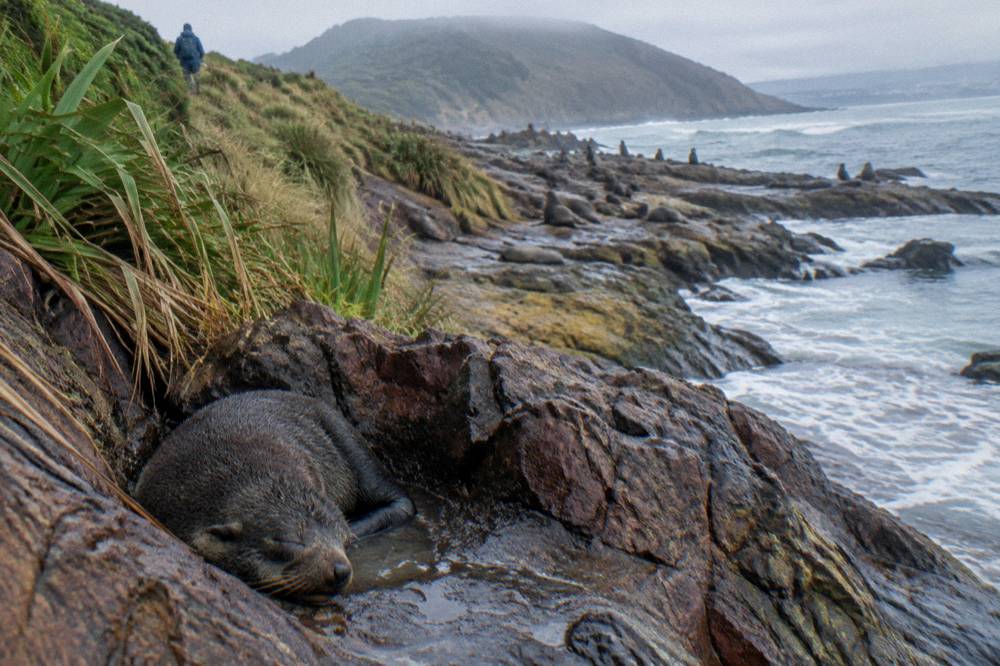
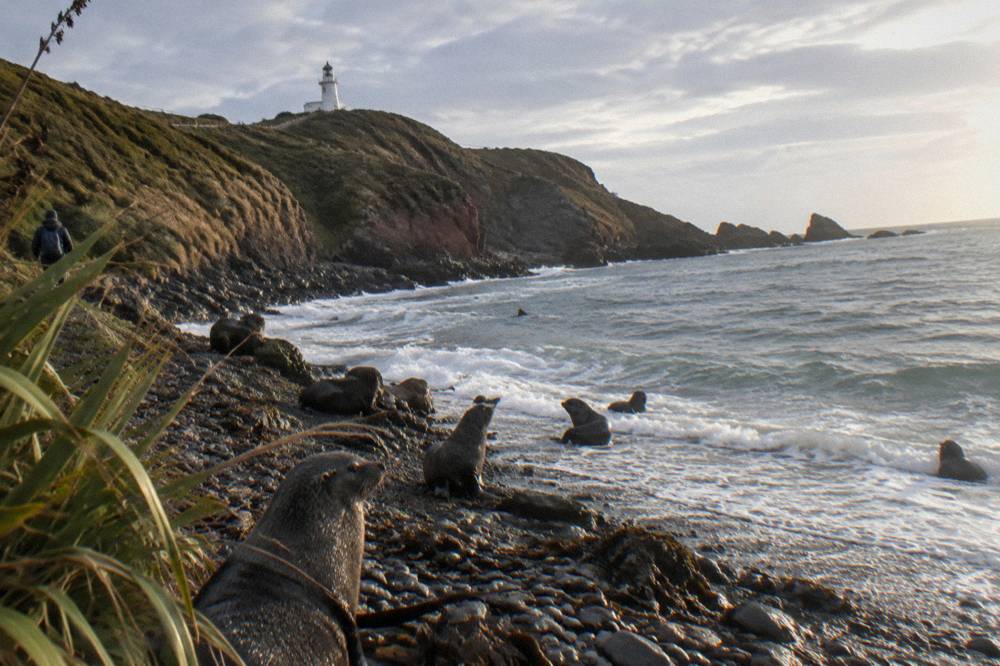
A little biology explains the stakes. A breeding group is a harem; adult males are bulls, females are cows, and immature males are called sub-adult males or bachelors. DOC warns that a pup disturbed by people can be abandoned. DOC's preliminary direct count found at least 1,000 pups at Cape Palliser in the 2025/26 breeding season, a figure DOC itself says to treat with caution, but it signals how significant this coast is for the species. Day trips that reach the far south east, like the Cape Palliser day tours from Wellington, visit the Ngawi seal colony stop and the 1897 lighthouse, and the same distance discipline applies there.
The rules also make trips better, not just lawful. A colony that is not reacting to you behaves naturally. At 20 metres or more, with a zoom lens or binoculars, you watch natural behaviour rather than a set of animals staring back at you. For photographers this is the difference between a frame full of life and a frame full of alert faces, which is why the photographing seals on a Wellington seal safari guide is built around working from distance.
Which Wellington Tour Suits Your Comfort With Distance?
If you want a 4WD trip to a seal coast, the Seal Coast Safari, from $110 and $111.80 per person across its two booking pages, is the option. If you want a walk instead, the council's Red Rocks track is self-guided, and the private full day tour adds Red Rocks as a stop within a 7 hour sightseeing day from $206.40 per person.
The choice is less about price and more about who holds the responsibility for distance. On the Red Rocks walk you make every call yourself under DOC's rules; on the tours the coastal stop still runs on the same 20 metre onshore figure. Wellington Seal Safari exists because that decision genuinely changes the day: a reader worried about disturbing wildlife is right to ask how close the tour gets before booking, and the answer is that the law sets the limit.
| Option | From price | Duration | Who manages the distance | Pickup |
|---|---|---|---|---|
| Exclusive Access Seal Coast Safari | $111.80 per person | 3 hours 30 minutes | 4WD driver, group max 10 | Wellington hotel or cruise ship |
| Wanderlust Half Day Seal Safari | $110 per person | 3 hours 30 minutes | 4WD driver | Wellington central or cruise terminal |
| Private full day sightseeing with Red Rocks stop | $206.40 per person | 7 hours | Private guide | Wellington hotel or port |
| Red Rocks walk (self-guided) | Walk only | 2 to 3 hours return | You, under DOC's 20 m rule | Starts at Owhiro Bay car park |
Planning around wind and light changes the experience on this coast, so the Wellington seal safari weather and wind guide is worth a read before you lock a date, and the what to wear guide covers the layers the south coast demands.
Common Questions About Getting Close To Seals On A Seal Safari
How Close Can You Get To The Seals On A Seal Safari?
Roughly 20 metres or more onshore, and about 50 metres where a vehicle is involved, wherever you can. On a Wellington seal safari the same 20 metre onshore rule applies to guests; neither safari booking page promises a closer approach or a guaranteed sighting.
Is It Illegal To Get Too Close To A Seal In New Zealand?
Yes. Seals are protected under the Marine Mammals Protection Act 1978, and harassing or disturbing one is an offence with a maximum penalty of two years in prison or a fine up to $250,000. DOC's 20 metre onshore rule is the practical standard, and touching a seal is never permitted.
Can You Pet A Seal If It Hugs You?
No. DOC is explicit that seals can be aggressive and carry disease, and touching one is an offence. A seal that rolls or appears affectionate is behaving normally, not inviting contact, and the safe response is to step back beyond 20 metres.
Do Seal Safari Tours Guarantee You Will See Seals?
No booking page on this site promises a sighting, and any percentage guarantee should be treated with suspicion. The Seal Coast Safari itinerary names seals on the route to Cape Terawhiti, but weather and the animals decide the day.
How Close Can A Drone Get To Seals?
Drones need DOC authorisation before flying near marine mammals at all, so there is no lawful recreational distance to quote. On any guided tour, leave the drone at home unless the operator holds the required authorisation.
Can Children Go On A Seal Safari?
On the Seal Coast Safari bookings the minimum age is not stated, so the booking page is where age terms appear. DOC asks that children be kept back from seals, and on self-guided walks at Red Rocks the 20 metre rule and constant supervision are on the adults.